
Why Bathrooms Are Turning Into Spa Spaces in Colorado Homes
Not long ago, the bathroom was one of the most overlooked spaces in the home—purely functional and often rushed through during design.
That’s changed.
In today’s Colorado homes, primary bathrooms are being designed as something entirely different:
A place to slow down.
A place to recover.
A place to reset.
And in many cases, it’s becoming one of the most used—and most valued—spaces in the entire home.
It Starts With How We Want to Feel at Home
The shift isn’t about features.
It’s about how the space supports your day.
Homeowners are asking:
- How does this space feel in the morning?
- Does it help me unwind at night?
- Can this space actually improve how I sleep, recover, and recharge?
Bathrooms have become one of the clearest answers to those questions.
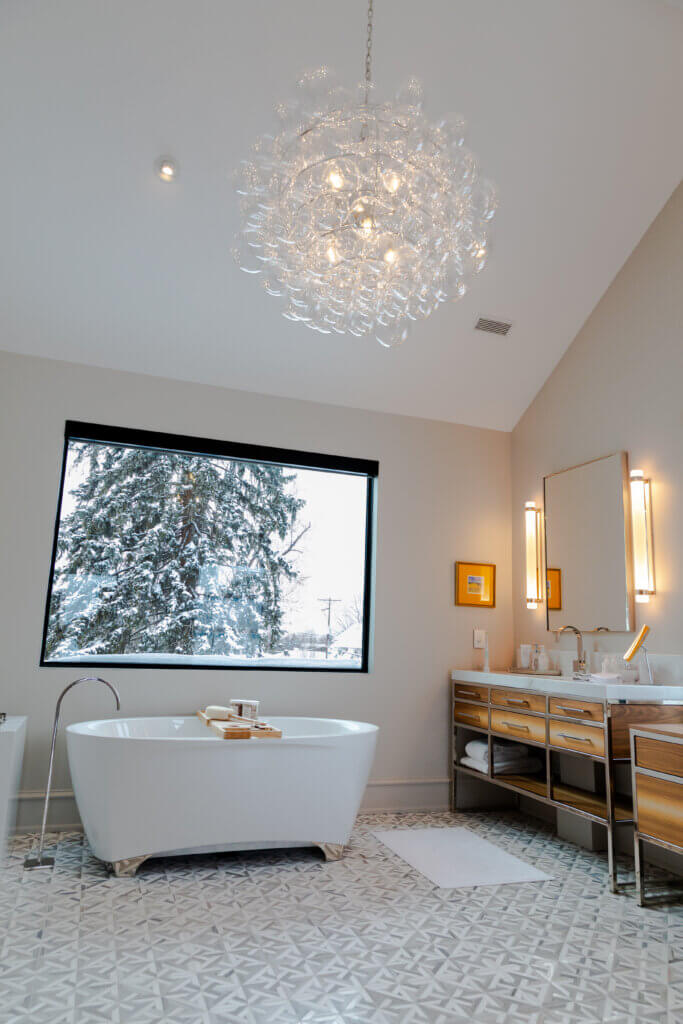
Natural Materials Set the Tone
Look at any well-designed primary bathroom right now and you’ll see a consistent direction:
- Layered stone and tile
- Warm wood tones
- Soft, neutral palettes
- Texture instead of contrast
The goal isn’t to impress—it’s to calm everything down.
And when those materials are paired with intentional lighting, the space starts to feel completely different.
Lighting Is What Brings the Space to Life
This is where most bathrooms either work… or don’t.
It’s no longer about a single overhead fixture. It’s about layered lighting that shifts throughout the day.
In a well-designed space, you’ll typically find:
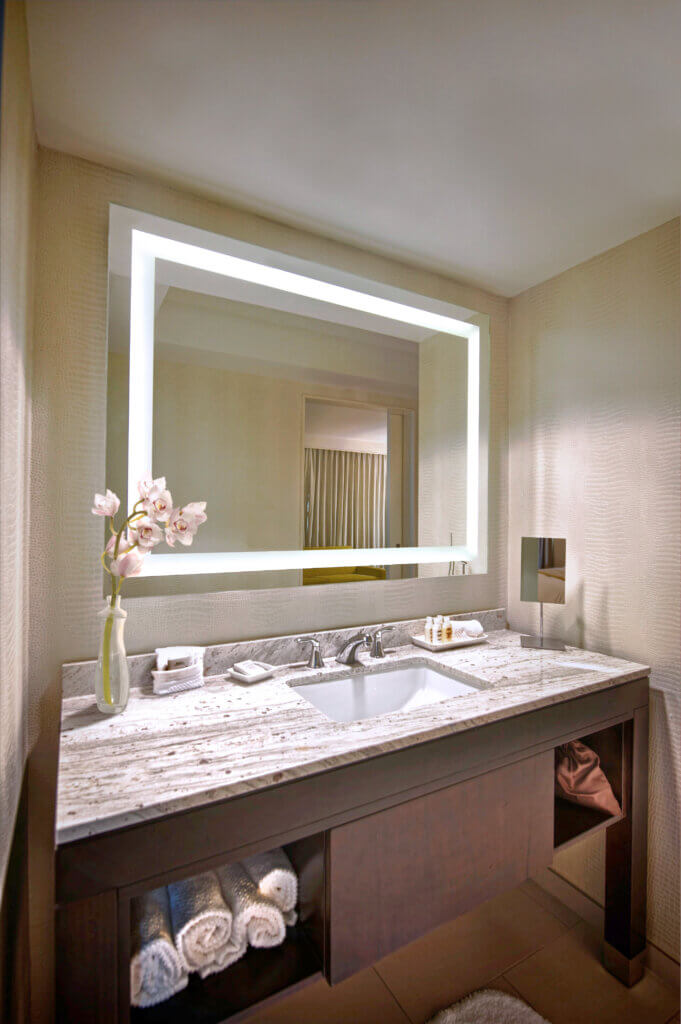
- Soft backlighting around mirrors
- Accent lighting that highlights texture (stone walls, niches, architectural details)
- Subtle toe-kick or under-vanity lighting
- Warm, dim evening scenes that change the entire feel of the room
During the day, the space feels bright and energizing.
At night, it becomes calm, quiet, and restorative.
Designed Around the Rhythm of the Day
One of the biggest shifts is subtle—but powerful.
Bathrooms are now designed around how they’re used over time.
- Brighter, cooler light in the morning to help you wake up
- Warmer, lower light in the evening to help you wind down
- Natural light managed throughout the day to reduce glare and heat
This aligns directly with how your body naturally responds to light and routine—something more homeowners are becoming aware of as wellness becomes a priority.
Mirrors Have Become a Design Feature
Mirrors are doing more than reflecting.
They’re now part of the lighting design itself:
- Clean, backlit mirrors that eliminate harsh shadows
- Integrated lighting that supports the entire room
- Hidden displays behind glass for a clean, minimal look
It keeps the space simple—but far more functional.
Small Details That Change Everything
The difference between a nice bathroom and a spa-like one usually comes down to details.
Things like:
- Soft lighting inside wall niches
- Low-level lighting for nighttime navigation
- Balanced vanity lighting that actually flatters
These aren’t headline features—but they’re what make the space feel complete.
The Rise of True Wellness Spaces
This is where things take a bigger step forward.
Primary bathrooms are no longer just bathrooms—they’re becoming full wellness environments.
We’re seeing more homeowners incorporate:
- Soaking tubs (hot and cold)
- Steam showers
- Infrared saunas
- Dedicated massage or recovery spaces
At that point, you’re not designing a bathroom anymore.
You’re designing a personal wellness routine into the home.
Why Sound and Entertainment Now Matter
Once people start spending real time in these spaces—15, 30, even 60 minutes—the experience has to support it.
Silence isn’t always the goal.
Instead, it becomes about creating the right environment:
- Music during a soak
- Guided meditation or breathwork
- Ambient sound to disconnect from the day
- Even catching up on a show while winding down
This lines up with what homeowners consistently value most: spaces that are simple to use, immersive, and tailored to their lifestyle—not complicated systems they have to think about.
Designed to Be Heard, Not Seen
Bathrooms and wellness areas introduce challenges:
- Moisture and humidity
- Hard surfaces that reflect sound
- Limited space for visible equipment
So the approach has to be intentional.
That typically includes:
- Discreet in-ceiling or architectural speakers
- Even sound coverage without “hot spots”
- Equipment designed for high-moisture environments
The goal is simple:
You hear it—but you don’t see it.
Entertainment Without Disrupting the Design
For some homeowners, wellness includes unplugging.
For others, it includes staying connected—just in a cleaner way.
That’s where things like:
- Mirror-integrated displays
- Hidden screens
- Minimal, integrated interfaces
come into play.
You get access to content without turning the space into a media room.
Privacy Without Losing Natural Light
In Colorado, natural light is non-negotiable.
But privacy still matters—especially in primary bathrooms.
The solution isn’t blocking light. It’s controlling it.
Thoughtful shading allows you to:
- Maintain privacy without darkening the space
- Reduce glare and heat during peak sun
- Keep views when you want them
It’s a small detail that has a major impact on how the space feels throughout the day.
Everything Working Together
The best spa-like bathrooms don’t rely on one feature.
They rely on how everything works together:
- Lighting that shifts throughout the day
- Color options in light that paint the room – and the mood
- Sound that enhances the environment
- Shading that manages light and privacy
- Simple control that ties everything together
When it’s done right, you don’t think about any of it.
You just walk in—and the space feels exactly how it should.
Final Thought
The most successful bathroom designs today don’t try too hard.
They’re calm. Thoughtful. Intentional.
And when everything comes together just right…
It’s not just a bathroom anymore.
It’s where you reset.
Contact us about what is important to you.